While your current kitchen might feel cramped and dark, imagine stepping into a bright, open space that flows effortlessly into your garden.
I’ve discovered that kitchen extensions aren’t just about adding square footage; they’re about changing how you live.
Whether you’re considering a side return, rear extension, or full redesign, the right choices can turn your cooking space into something special.
Let me show you how smart layouts, strategic lighting, and bold design decisions can completely reimagine your kitchen’s potential.
Reimagine Your Kitchen Before Building an Extension
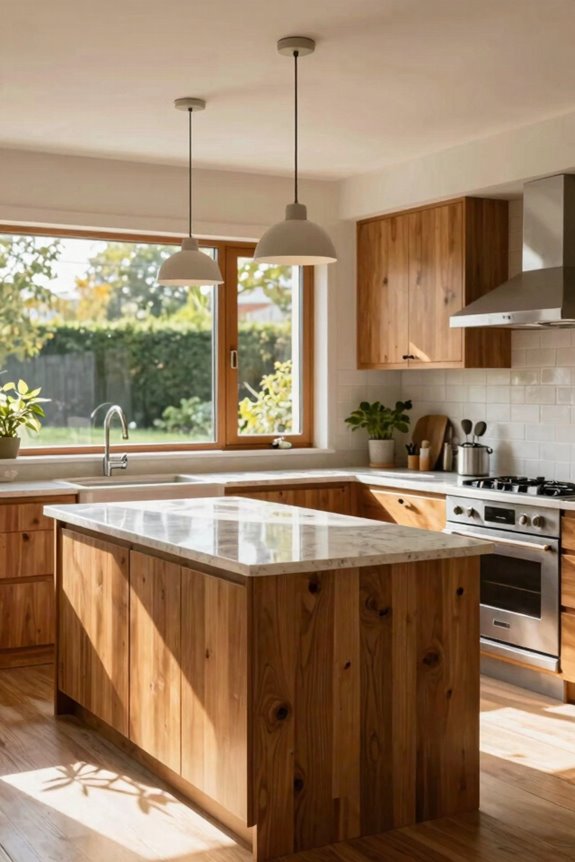
Why rush into an expensive extension when your existing kitchen might hold untapped potential? Before you commit to planning permission and new foundations, reconsider what you’ve got. Open internal walls to create an open plan layout that floods your space with light. Relocate your kitchen to a brighter spot if possible.
Install sliding doors leading to your rear wall and garden, instantly expanding your sense of room. Add a breakfast bar to create natural zoning without cramped boundaries. These clever strategies make your existing space into a welcoming hub where your family wants to gather. Upgrade cabinetry and glazing for major impact.
You’ll save money while creating the kitchen you’ve always wanted; no extension required.
Understand Your Kitchen Extension Options (Side Return, Rear, Full)
I’m going to show you two powerful ways to expand your kitchen: side returns and rear extensions. Each offers distinct advantages for your home.
Side returns are compact yet mighty, perfect for semi-detached and terraced properties, using sliding or bi-fold doors to flood light deeper into your space. Rear extensions maximize your garden connection by spanning the full house width, creating spacious open-plan kitchens that blend dining, cooking, and outdoor living.
Side Returns: Compact Yet Mighty
How much kitchen space are you really missing? A side return kitchen extension might be your answer. This compact solution works brilliantly for semi-detached and terraced homes, expanding your kitchen without consuming your entire house width.
I’ve found that sliding or bi-fold doors work wonderfully in these narrow footprints. They draw natural light deeper into your home, creating an inviting atmosphere. You don’t need massive doors; even two-panel options deliver substantial benefits.
Here’s what makes side returns mighty: they preserve your gardening space while adding 3–4 square metres of usable area. Pair French doors with a niche opening for an elegant alternative. You’ll create a functional kitchen-dining zone that feels well-considered and connected.
This practical extension approach belongs in homes where every square foot counts.
Rear Extensions: Maximizing Garden Connection
Ready to reclaim your garden and create a new kitchen design? A rear extension does exactly that. By enclosing unused outdoor space like an alley or side return, you’ll create a full-width kitchen that spans your entire home’s depth.
Picture this: glazing and bi-fold doors flood your open-plan kitchen with natural daylight. A glass roof amplifies brightness while creating a direct connection to your garden. This approach works brilliantly in older Ottawa homes where kitchens feel cramped and disconnected.
You’re not just adding square footage. You’re fundamentally reshaping how your family lives. The expansion lets you integrate dining seamlessly with cooking. Warm lighting reflects off polished surfaces as you gaze toward your garden.
This improvement creates the welcoming, spacious kitchen you’ve always wanted. Your home becomes the gathering place everyone craves.
Plan Your Kitchen Extension Budget and Timeline
Before you swing a hammer or order materials, you’ve got to nail down your budget and timeline; they’re the backbone of your whole project. I recommend using a renovation cost calculator first. It’ll show you exactly where your money goes and help you understand price determinants.
Here’s the real talk: foundation and system tie-ins create knock-on costs, even for small extensions. That’s why front-loading nitty-gritty decisions saves you serious time and money during construction.
Small kitchen extensions typically take 8 to 14 weeks after permits arrive. But permits themselves? Check with your local authority first, as not all bump-outs require planning permission.
Smart budgeting and scheduling now means fewer surprises later. You’re joining countless homeowners who planned strategically and successfully completed their kitchen extensions.
Optimize Your Layout for Flow and Efficiency
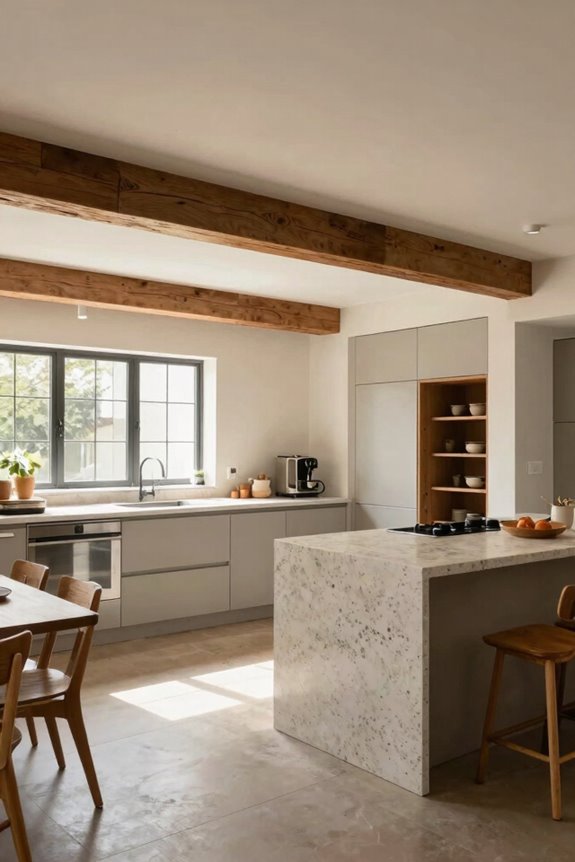
Once your budget and timeline are locked in, it’s time to shape the actual layout, the key to a functional kitchen extension. I’ll help you create a workflow that feels natural and inviting.
A strong work triangle connecting your sink, hob, and fridge keeps daily tasks efficient. Open plan designs eliminate boxed-in feelings while preserving natural light throughout.
| Layout Type | Best For |
|---|---|
| Galley | Narrow spaces |
| L-Shape | Corner areas |
| U-Shape | Compact zones |
| Island-Centered | Social kitchens |
| Linear | Single walls |
Consider adding an island as your social hub. Use drawers over cupboards and integrated appliances to reduce visual bulk. Flexible spaces between cooking and dining zones invite gathering.
This balanced circulation keeps movement smooth and welcoming for everyone using your new kitchen extension.
Maximize Light With Strategic Glazing and Rooflights
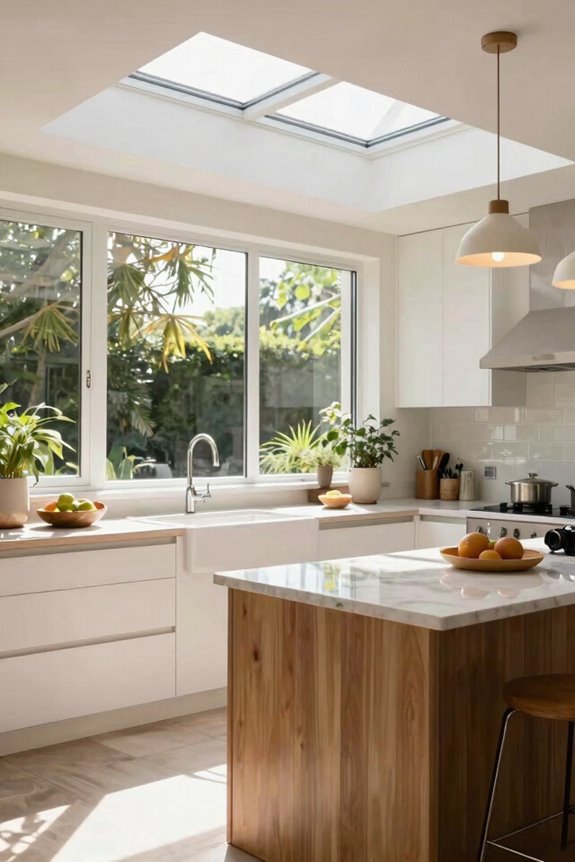
I’ll install bold rooflights above work zones, flooding the space with overhead light that banishes shadows during cooking. You’ll frame excellent outdoor views through strategically placed side and high-level windows, creating layers of natural light that visually expand your entire extension.
These glazing choices work together to brighten every corner while connecting your kitchen to the world outside.
Rooflights Transform Narrow Spaces
How can you flood a cramped kitchen extension with natural light without knocking down walls? Rooflights are your answer. These glazing solutions inject daylight from above, banishing shadows and creating an open feel in narrow spaces.
Install rooflights directly over worktops to eliminate prep shadows while you cook. A glazed strip above your dining table acts like a natural spotlight, making mealtimes brighter and more enjoyable. Skylights and roof windows offer budget-conscious brightness, making your extension feel significantly larger.
Vary your roof profile to define cooking, dining, and social zones without sacrificing openness. This strategic extension lighting approach works brilliantly in tight layouts. Plan rooflight placement early; glazing options and positioning directly influence your lighting strategy and overall budget. You’ll create an inviting, spacious kitchen that welcomes everyone.
Windows Frame Outdoor Views
While rooflights flood your extension from above, strategic windows do something equally powerful: they frame your outdoor views and blur the line between inside and outside. I’ve discovered that large windows with slim black frames or warm timber surrounds visually expand compact kitchens while flooding spaces with natural light.
Consider these glazing strategies:
- Bi-fold glass doors create seamless indoor-outdoor flow to your garden
- Fixed glazing panels maximize views without compromising wall space
- Side returns bring light into corners and awkward angles
- Glass roofs open narrow spaces and connect cooking zones to the sky
When you connect your kitchen to gardens through strategic glazing, you’re not just adding light. You’re creating an open plan sanctuary that changes how you experience cooking, dining, and gathering with family. Your extension becomes an extension of nature itself.
Build Upward: Floor-to-Ceiling Storage Solutions
When you build upward instead of outward, you’re discovering hidden potential in your kitchen. Floor-to-ceiling storage makes a significant difference in your space. Extending cabinetry upward creates seamless, integrated storage that makes rooms feel larger and more unified.
Building upward unlocks hidden kitchen potential, creating seamless storage that makes spaces feel larger and unified.
Tall pantry units run smoothly from your old kitchen into new space, achieving that single-space appearance. I recommend pairing these bold storage solutions with strategic lighting for tall cabinets. This combination maximizes your storage capacity while keeping everything accessible.
Open high shelves at upper levels break up visual bulk beautifully. They don’t overwhelm your room; they invite exploration. Add adjustable shelves for flexibility as your needs change.
Choose matte black hardware or warm wood tones to personalize your wall storage optimization. This approach delivers both function and style, helping you become part of the smart-kitchen movement.
Choose Large Windows to Frame Views and Expand Space
Because natural light improves kitchens in ways artificial lighting simply can’t, I encourage you to prioritize large windows in your extension design. You’ll create depth and openness that makes your space feel more spacious.
Consider these powerful glazing strategies:
- Bi-fold or sliding doors blur indoor-outdoor boundaries, enlarging your perceived space dramatically
- Slim black frames or timber surrounds add architectural character while framing beautiful views
- Expansive glazing paired with rooflights maintains consistent light flow throughout the day
- Strategically positioned windows catch morning or afternoon sun, enhancing natural light distribution
Large glazing makes your kitchen brighter and more welcoming. When you position windows to capture sunlight and frame outdoor vistas, you’re not just brightening your space; you’re connecting your kitchen to nature itself. This design choice belongs in every modern extension.
Create Seating That Hides Storage Underneath
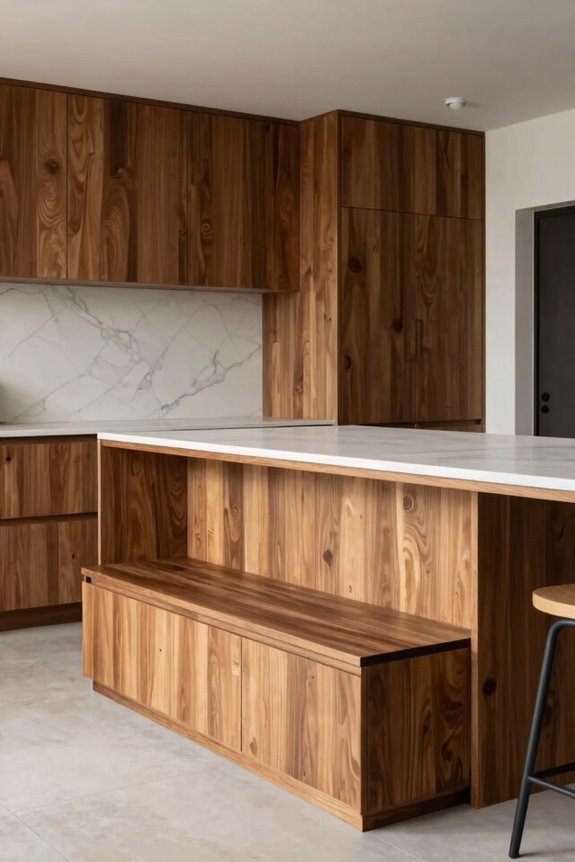
I’ve discovered that built-in benches with hidden storage underneath are excellent solutions for smaller kitchens. You’ll tuck away school supplies, cookbooks, and table linens in lift-up cushioned seats while creating a cosy nook that doesn’t gobble up floor space.
Pair your bench with tall cabinetry nearby, and you’ve created a streamlined, functional hub in a previously cramped corner.
Built-In Benches Save Space
How much wasted space sits beneath your kitchen chairs right now?
Built-in benches make use of that empty gap and create valuable real estate. You’re creating space-saving seating that works harder for your home. When you install a snug dining nook with under-seat storage, you’re designing a kitchen that truly belongs to your family’s lifestyle.
Here’s what makes built-in benches brilliant:
- Lift-up seats reveal hidden storage for seasonal dishes and cookbooks
- A dining alcove fits seamlessly into side returns without consuming floor space
- Multi-function seating accommodates homework, brunch, and casual meals effortlessly
- Integrated lighting defines your open-plan dining area with warmth
Pair your space-saving seating with cushions for comfort. Add integrated lighting to highlight your design. This approach creates an organized, inviting kitchen where every square inch matters.
Storage Underneath Maximizes Function
Built-in benches offer a clever storage strategy you won’t find in ordinary kitchen seating. I’ve discovered that lift-up seating converts your dining nook into hidden storage space. Cushioned bench tops conceal under-seat compartments perfect for rarely used appliances and cookware. You’ll access everything through hinged lids or smooth-gliding drawers.
Consider designing a pantry behind seating backs along your wall. This multi-zone storage approach keeps countertops beautifully clear. Pair your benches with slimline cabinetry and tall cupboards throughout your space. The result is organized, accessible storage that blends naturally.
I recommend choosing durable upholstery in warm textures that match your kitchen’s personality. This built-in storage solution works well for seasonal linens and bulk items. You’re creating a kitchen where everything has its place and stays hidden neatly.
Cushions Create Cosy Comfort
What makes a basic bench into your kitchen’s coziest gathering spot? Cushions do. I’ve discovered that adding soft, textured cushions to your bench seating instantly makes your kitchen dining nook feel warm and inviting. You’re creating a space where your family actually wants to linger.
Here’s why cushions matter for small kitchen extensions:
- They soften hard surfaces, making extended seating genuinely comfortable
- Cushions add visual warmth and personality to your space
- Lift-up lids beneath cushions hide clutter effortlessly
- Integrated storage stays accessible without sacrificing coziness
Choose durable, washable fabrics in neutral tones or bold patterns that match your kitchen’s vibe. Pair your cushioned bench seating with hinged cushion tops to access under-seat storage easily.
This family-friendly approach combines comfort with clever organization, making your space into somewhere everyone belongs.
Brighten Your Extension With Pale Colors and Reflective Finishes
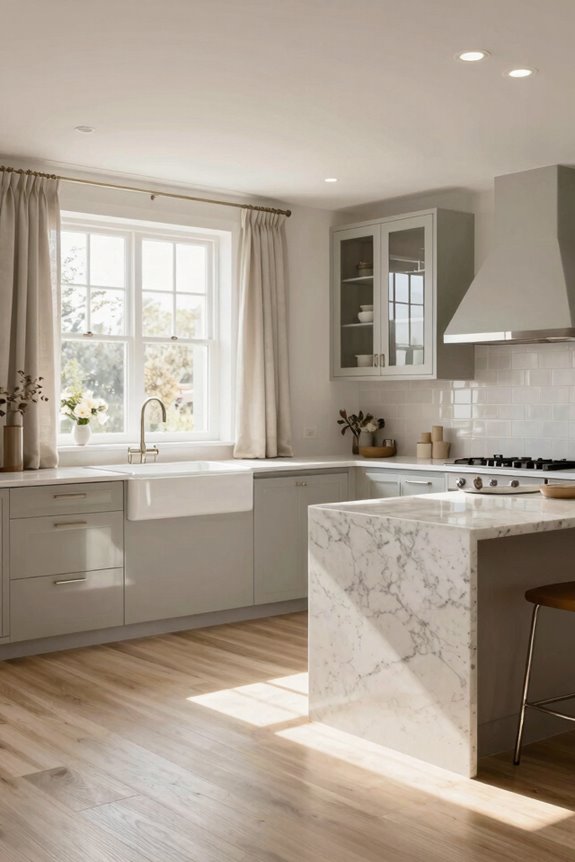
Why settle for a dim, cramped-feeling space when pale colors and reflective finishes can brighten your kitchen extension into something truly luminous?
I’ve discovered that pale tones on walls bounce light beautifully, making your extension feel instantly brighter. Pairing these with pale timber flooring creates warmth without heaviness, keeping everything airy and inviting.
Here’s where it gets exciting: gloss cabinetry, mirrored splashbacks, and metallic accents amplify light reflection dramatically. They’re highly effective for extension brightness.
Don’t forget your ceiling—paint it lighter than your walls to create perceived height and openness that will surprise you.
Want personality? Add a bold navy island against your calm base palette. This contrast maintains brightness while giving your space character.
These reflective finishes and pale colors work together, creating an open and airy kitchen you’ll enjoy spending time in.
Design Your Kitchen Layout Around Daily Routines
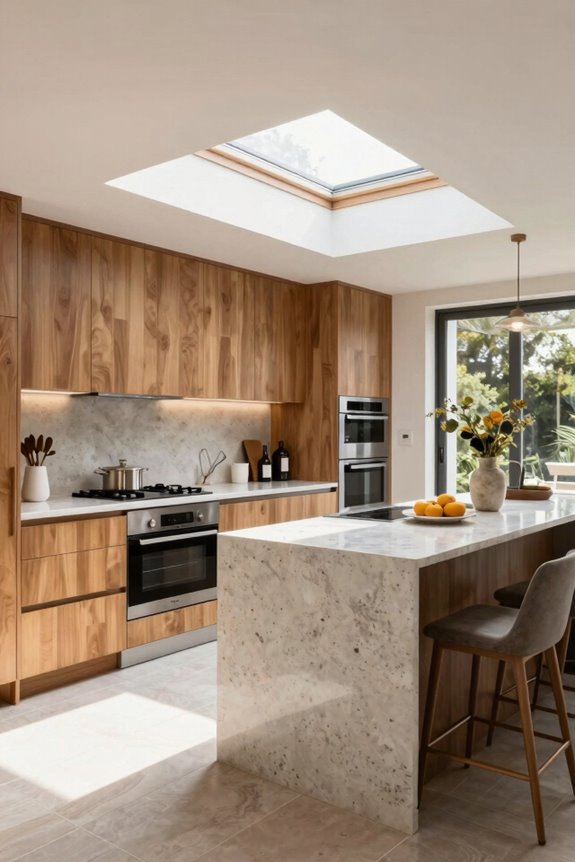
How you move through your kitchen matters more than you might think. I’ve found that designing around your daily routines creates a personal space where cooking feels effortless.
Start by mapping your work triangle: connecting sink, hob, and fridge. Then layer in zoning to support how you actually live:
- Island or peninsula as your social gathering spot
- Breakfast bar for quick morning meals
- Distinct cooking and dining zones in open plan layouts
- Clear circulation paths that minimize backtracking
Thoughtful kitchen layout prevents frustration. Position your prep areas with sightlines to the garden. Add task lighting over work zones and layered lighting for cooking and entertaining.
Smart storage solutions, such as drawers over cupboards and integrated appliances, reduce clutter and streamline daily routines. Your extended kitchen becomes an extension of how you want to live.