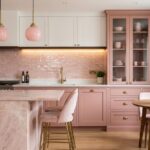
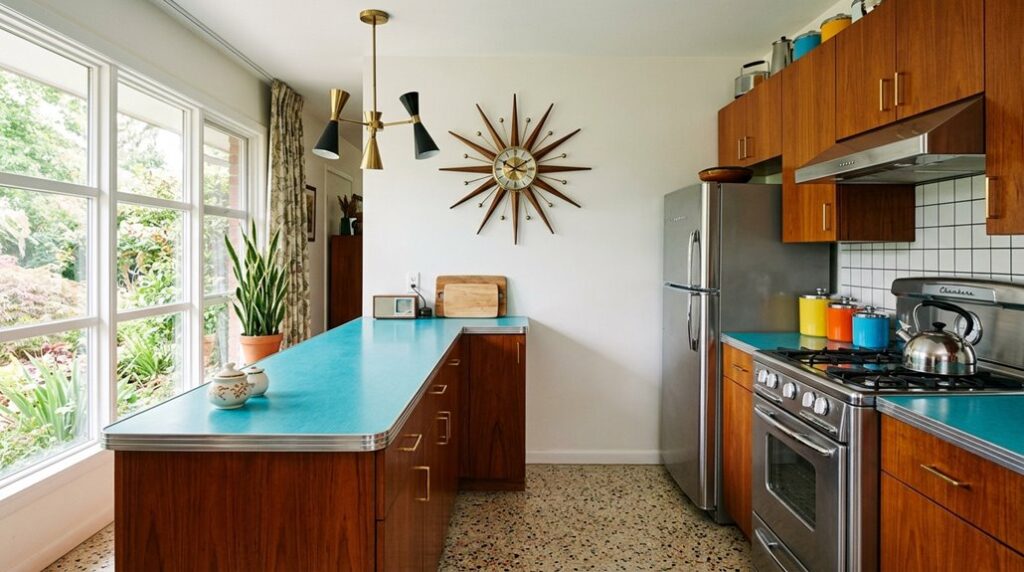
I recently toured a 1960s kitchen that felt frozen in time, and honestly, I wanted to move right in. That’s the appeal of mid-century design: it blends nostalgia with genuine functionality. You don’t need a complete renovation to capture this timeless style.
Simple swaps like warm walnut cabinets, brass hardware, and geometric tile can completely revamp your cooking space. But here’s where it gets interesting: the real trick involves strategic layout choices that’ll change how your kitchen actually works.
Start With Warm Wood Cabinets and Vintage Lighting
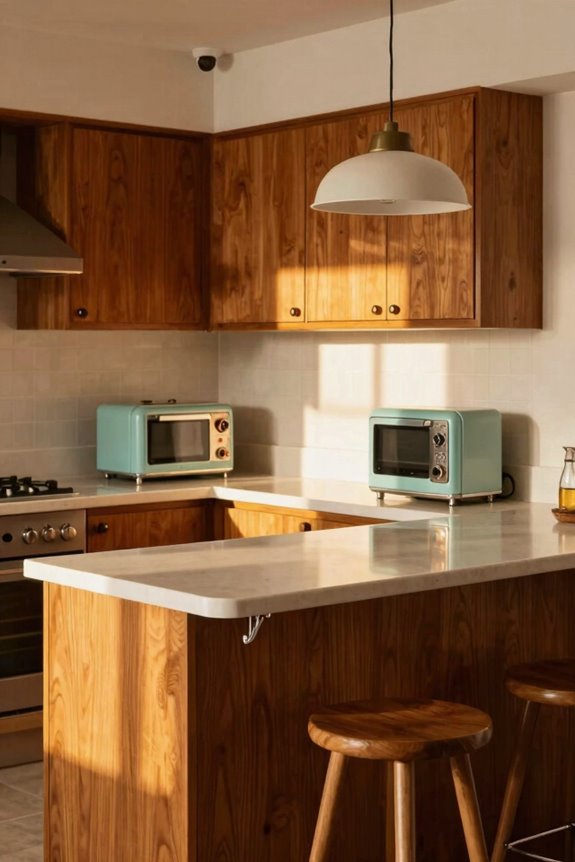
The foundation of any mid-century kitchen transformation begins with rich wood cabinets that’ll instantly warm up your space. Choose walnut cabinetry or teak veneers to create that authentic, organic texture you’re craving. Flat-front cabinetry with minimal hardware delivers the clean, streamlined look that defines this era.
Next, pair your warm wood cabinets with vintage lighting as your striking centerpiece. Sputnik fixtures and globe pendants complement the natural wood tones beautifully. They’ll anchor your retro mood while casting warm light across your kitchen.
Vintage lighting fixtures like Sputniks and globe pendants anchor your retro mood while beautifully complementing warm wood tones.
Consider adding a curved island in teak to enhance that social-focused layout. Balance the wood warmth with bold accent colors, such as mustard, olive, or deep teal. These hues pop against natural materials, creating visual interest.
You’re building a space where style meets function, where authenticity meets comfort.
Add Bold Color Through Cabinets, Tile, or a Statement Sink
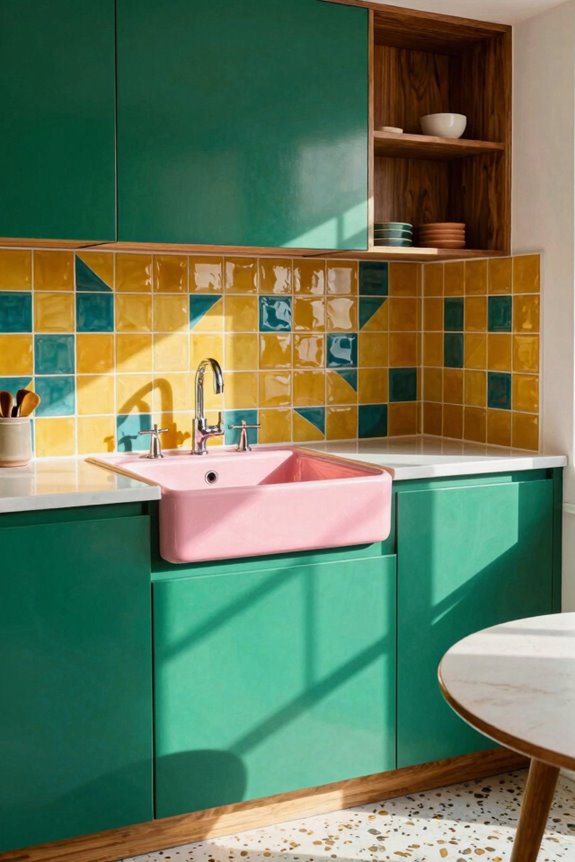
Now it’s time to inject personality into your mid-century kitchen through fearless color choices. Consider bold cabinetry in striking orange, teal, or mustard paired with warm walnut bases for maximum impact. A statement sink becomes your centerpiece when you choose vivid colors or color-blocked designs that contrast beautifully against wood cabinetry.
Update your walls with color-blocked backsplashes or geometric tile patterns that scream retro authenticity. These retro tile choices reinforce mid-century vibes while complementing your bold color palette perfectly.
Don’t overlook terrazzo countertops either; their bright flecks bring energy and era-accuracy to your space. Layer everything together using open shelving to showcase your colorful fixtures and create visual rhythm throughout your kitchen. You’re building a unified, personalized mid-century kitchen that reflects your individual style and belongs entirely to you.
Center Your Layout Around a Round Table or Island
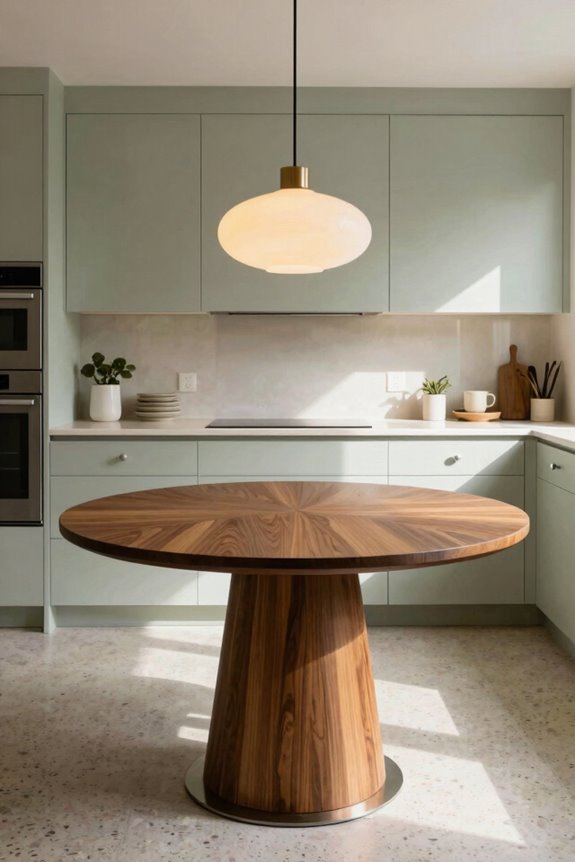
Why shouldn’t your kitchen’s heart be as inviting as its style? A round table or central island anchors your mid-century design perfectly. I’ve found this creates the ideal gathering spot for cooking, dining, and conversation all at once.
Here’s what makes a round table work beautifully:
- Tapered legs keep the look sleek while maintaining an open-plan feel
- Walnut cabinetry pairs seamlessly with warm wood tones for unified design
- Curved seating enhances that era-accurate, friendly conversation flow
- Extendable variants adapt to your space without sacrificing style
Position your round table or island where it visually connects your living and dining zones. Coordinate it with mid-century lighting and quality materials.
You’ll create a kitchen layout that’s both functional and inviting, exactly where your family wants to gather.
Mix Natural Wood With Geometric Tile and Brass Hardware
Once you’ve anchored your kitchen with that perfect round table, it’s time to layer in the materials that truly define mid-century style. I’d combine warm wood tones like walnut or teak with striking geometric tile patterns. This pairing creates that classic mid-century modern contrast: organic warmth meets graphic precision.
Add brass hardware to your flat-front wood cabinetry for subtle metallic warmth. Consider terrazzo surfaces or hex tiles for your backsplash to echo period patterns. These materials work together beautifully, creating a unified retro look that feels well-planned and connected.
| Material | Color | Pattern |
|---|---|---|
| Wood Cabinetry | Walnut | Flat-front |
| Backsplash | Cream | Hexagon tiles |
| Hardware | Brass | Modern pulls |
| Flooring | Multi-tone | Tessellated |
| Accents | Warm tones | Terrazzo |
Light Multiple Zones for Warmth and Functionality
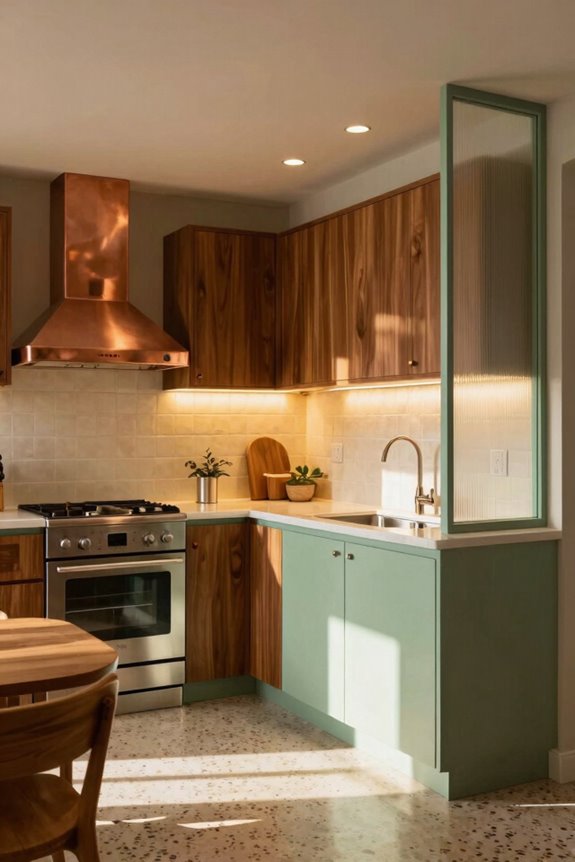
Because lighting sets the mood in your mid-century kitchen, you’ll want to think beyond a single overhead fixture. I recommend layering your kitchen lighting across multiple zones to create warmth and functionality that makes your space feel inviting.
Here’s how to light your mid-century kitchen effectively:
- Install pendant lights above your island or breakfast core for focused task lighting and visual interest
- Add ambient lighting with globe or sputnik-style fixtures to illuminate your entire open-plan layout
- Use natural light from large windows to brighten cooking areas during daytime hours
- Layer accent lighting with brass fixtures to highlight wood accents and geometric details
This approach ensures every zone, cooking, dining, and socializing, gets proper illumination. You’ll create a warm, connected space where family naturally gathers. Strategic kitchen lighting improves your mid-century design from ordinary to something special.